

How to Have Difficult Conversations with Struggling Teachers
Most administrators dread these conversations. But with the right framework, they become one of your most powerful leadership tools.
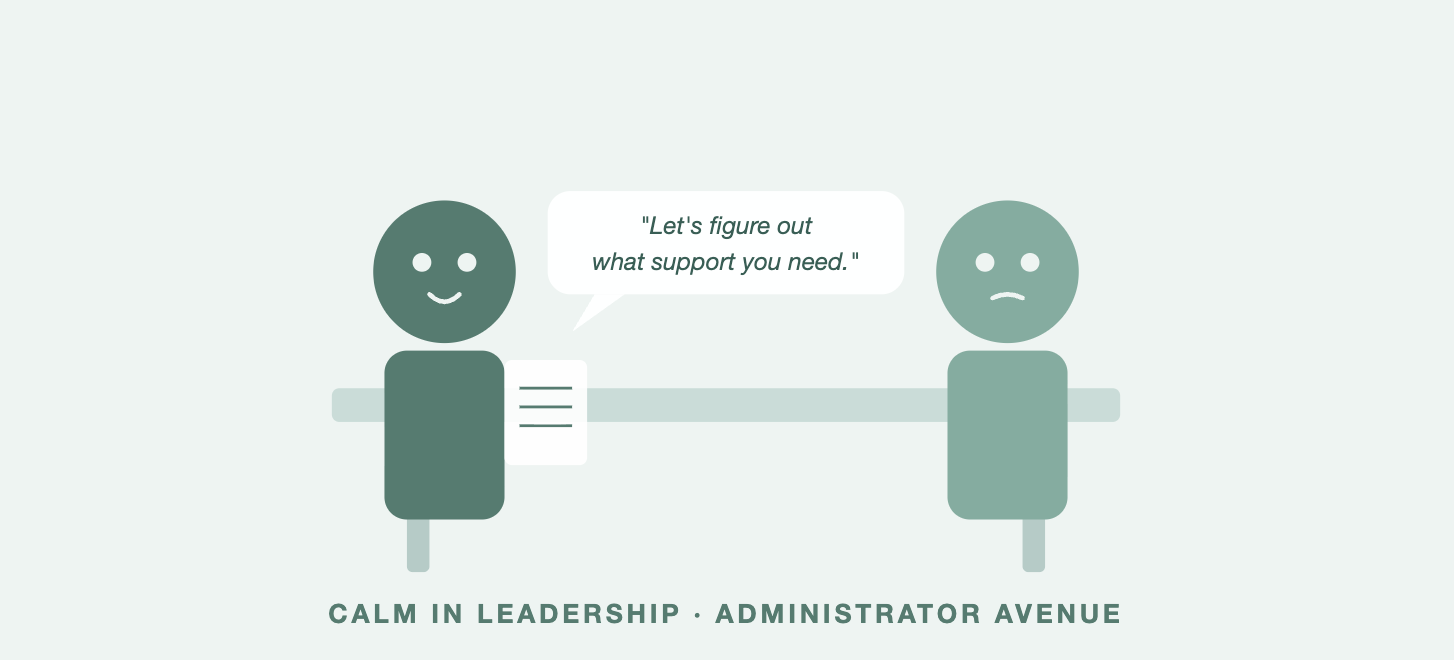
No one becomes a school administrator because they love delivering hard news. But if you're leading a school, difficult conversations with struggling teachers are unavoidable — and how you handle them makes all the difference for the teacher, your staff culture, and ultimately your students.
The CALM Framework — Control the Environment, Assess the Situation, Lead the Response, and Move Forward — gives you a clear, repeatable process for these moments. Here's how each step applies when you need to sit down with a teacher who is struggling.

C — Control the Environment
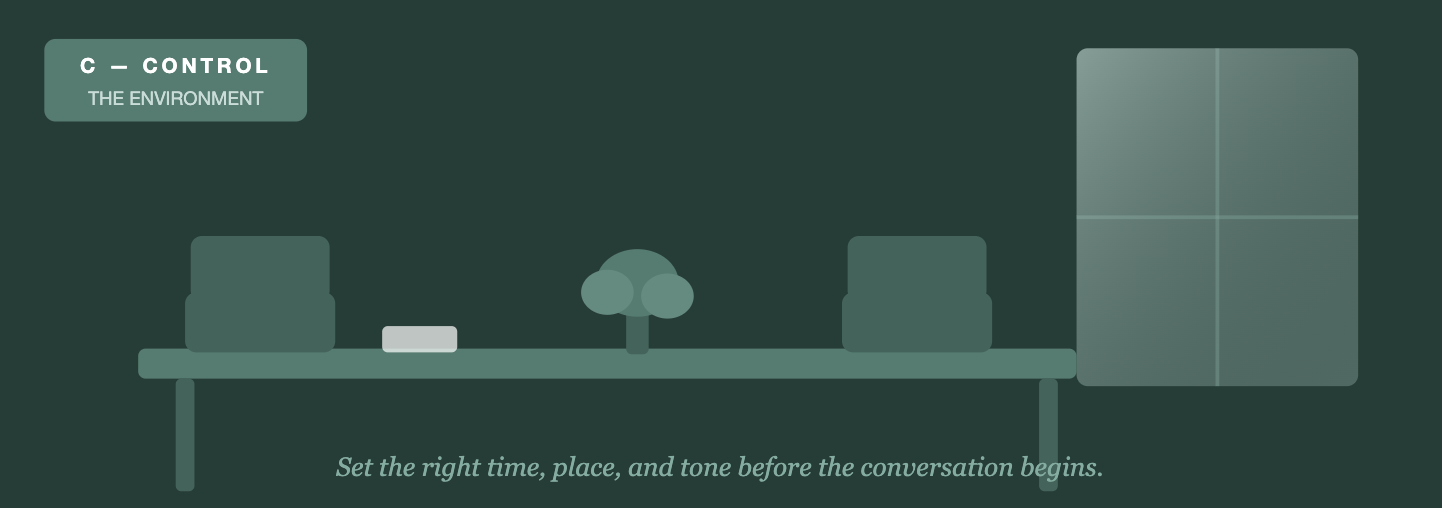
The first step is to stabilize the environment before trying to solve anything. For difficult teacher conversations, this means getting the conditions right before you sit down.
The biggest mistake administrators make is waiting too long — then addressing the concern in the hallway, right before class, or during a high-stress day. That's not a conversation; it's a confrontation. Good timing and a private, neutral setting signal that this is a serious but safe conversation, not a punishment.
Address concerns within 48 hours of observing them. Choose a private space. Minimize interruptions. And check your own emotional temperature before you walk in — your calm is contagious.
A — Assess the Situation
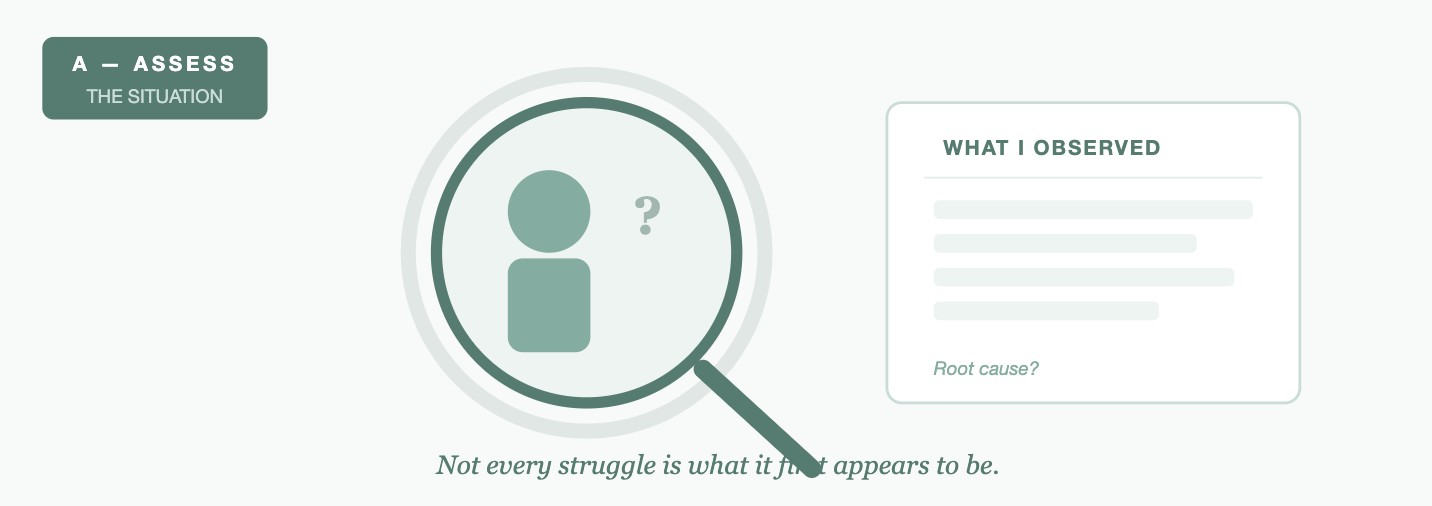
Not every struggling teacher has the same problem. A classroom management issue might stem from unclear routines. Low student engagement might trace back to a teacher who feels unsupported or overwhelmed. Before you respond, you need to understand what you're actually dealing with.
Walk into the conversation with curiosity, not judgment. Most struggling teachers already know something is off — they're often demoralized before you ever sit down. Your job is to open a real conversation, not deliver a verdict.
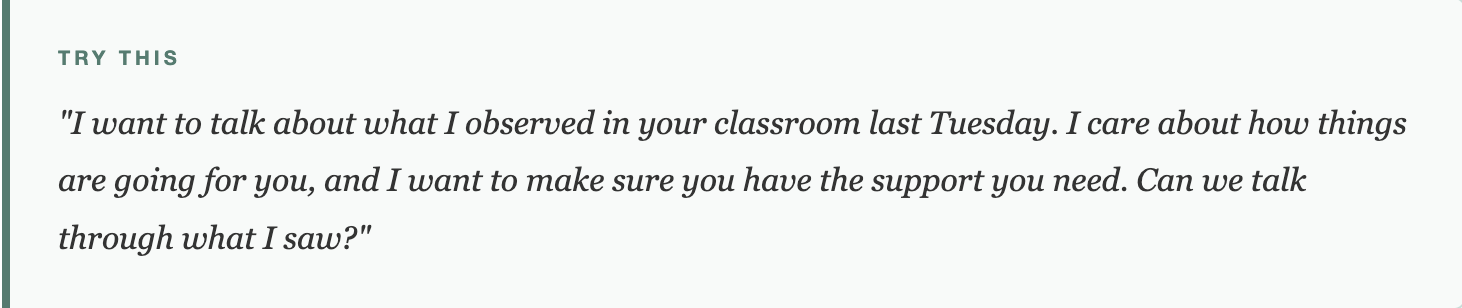
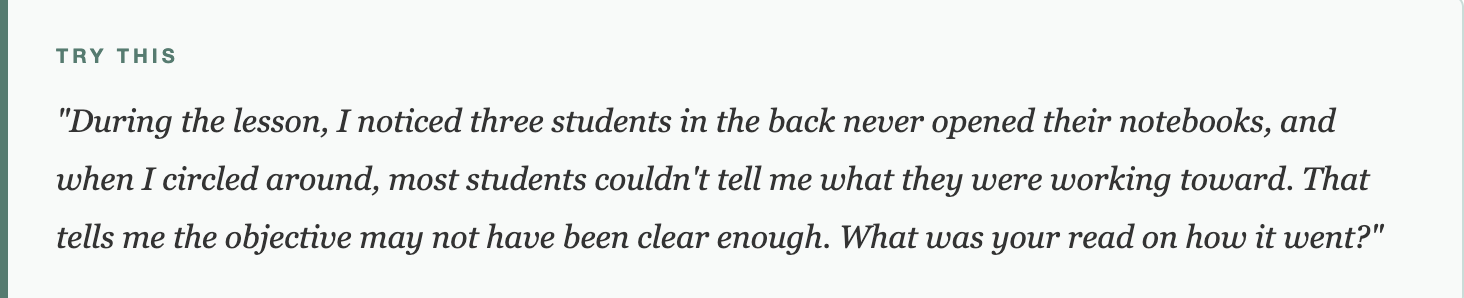
Be specific about what you observed — and then give them space to respond. Vague feedback is kind in the moment and cruel in the long run. "The lesson didn't land" helps no one. "I noticed students were off-task during guided practice, and several couldn't explain the objective when I checked in" gives the teacher something real to work with.

L — Lead the Response
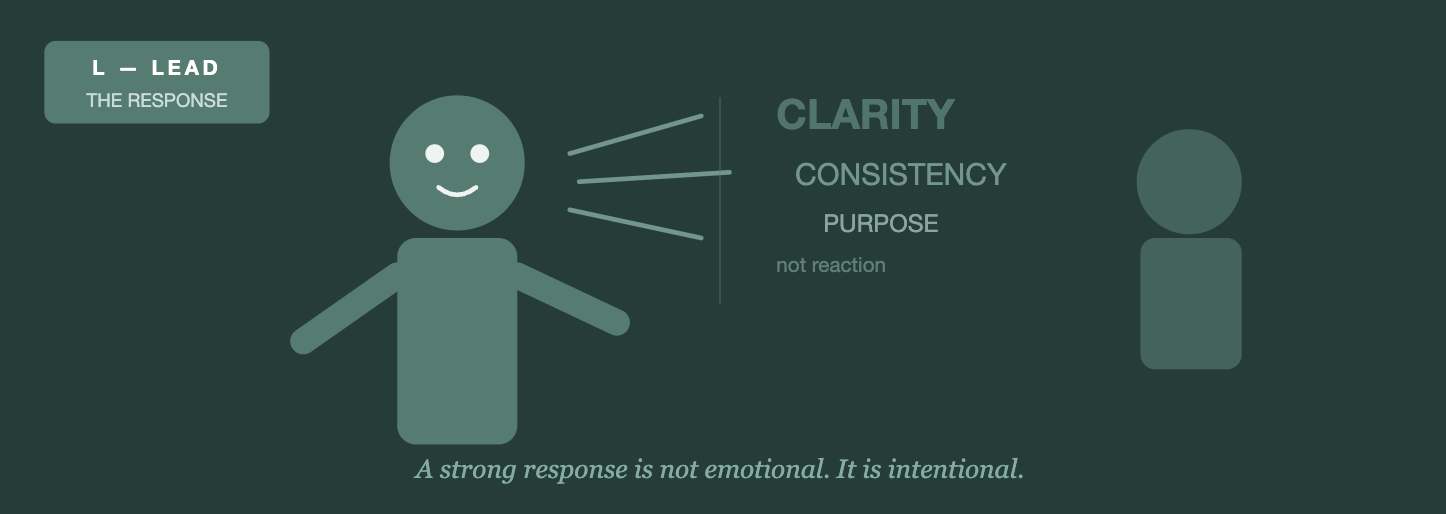
Once you understand the situation, respond with clarity and consistency — not reaction. Leading the response means being direct without being harsh, holding the standard without escalating, and communicating in a way that's professional and aligned with your school's values.
This is where many administrators drift into one of two failure modes: they soften the message so much the teacher doesn't understand the seriousness, or they come in so hard the teacher shuts down defensively. Neither helps anyone.
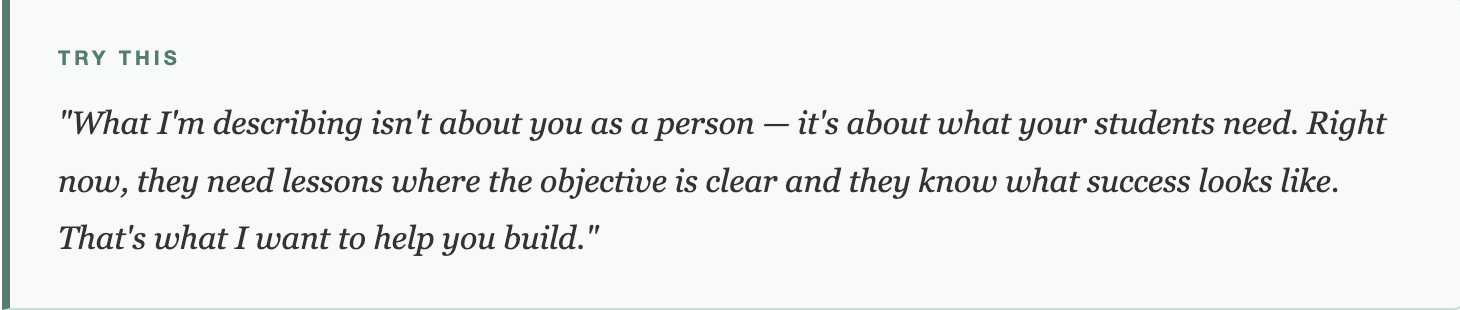
Name the concern clearly. Anchor it in what you observed. And frame it in terms of impact on students — not personal criticism of the teacher.

M — Move Forward
CALM doesn't stop at the conversation. The goal isn't just to end the difficult moment — it's to create real progress. That means co-creating a path forward, following up consistently, and strengthening the system so the issue is less likely to repeat.
After naming the concern and hearing the teacher's perspective, shift into partnership mode. What support would help? Are there classroom visits, co-planning sessions, or model lessons that could make a difference? End every conversation with a clear, agreed-upon next step — not just "let's see how it goes."
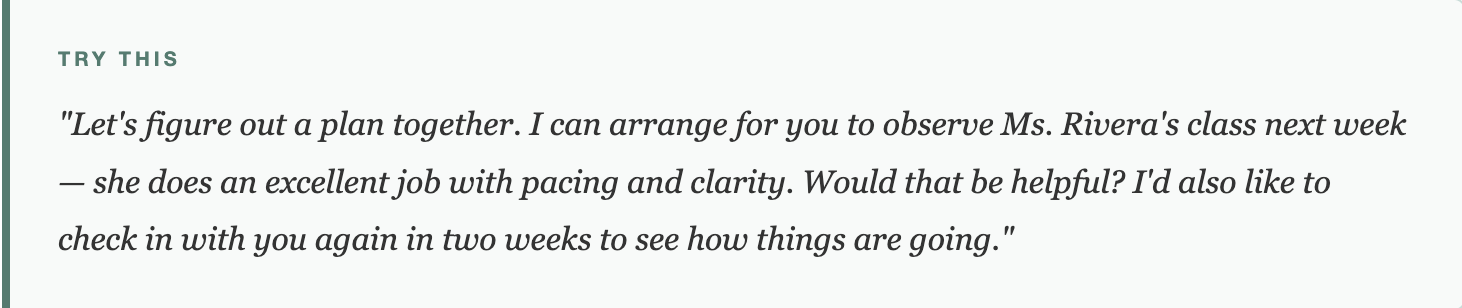
After the conversation, send a brief follow-up email summarizing what was discussed and what was agreed upon. Then actually follow up — drop by the classroom, ask how the strategies are going, be present. The teacher needs to know this wasn't a one-time check-the-box conversation.
When CALM is working, difficult moments don't just get resolved — they lead to stronger systems, clearer expectations, and a staff that trusts leadership to follow through.

The Bottom Line
Difficult conversations done well are one of the most powerful tools you have as a leader. The CALM Framework — Control the Environment, Assess the Situation, Lead the Response, Move Forward — gives you a clear, repeatable process so you're never walking into these moments unprepared.
You're not doing this to catch a teacher failing. You're doing it because great leadership means you're not willing to let a teacher — or their students — struggle alone.
Ready to Take the Next Step?
Want to Bring CALM to Your Leadership Team?
The CALM Framework helps school leaders respond to challenges with clarity and consistency — not reaction. Explore free resources, learn about the framework, or see how it applies to your school's systems.
