

CALM in Leadership
A practical framework for responding to school challenges with clarity, consistency, and purpose — instead of reacting in the moment.
The Real Reason Schools Stay Stuck in Reactive Cycles
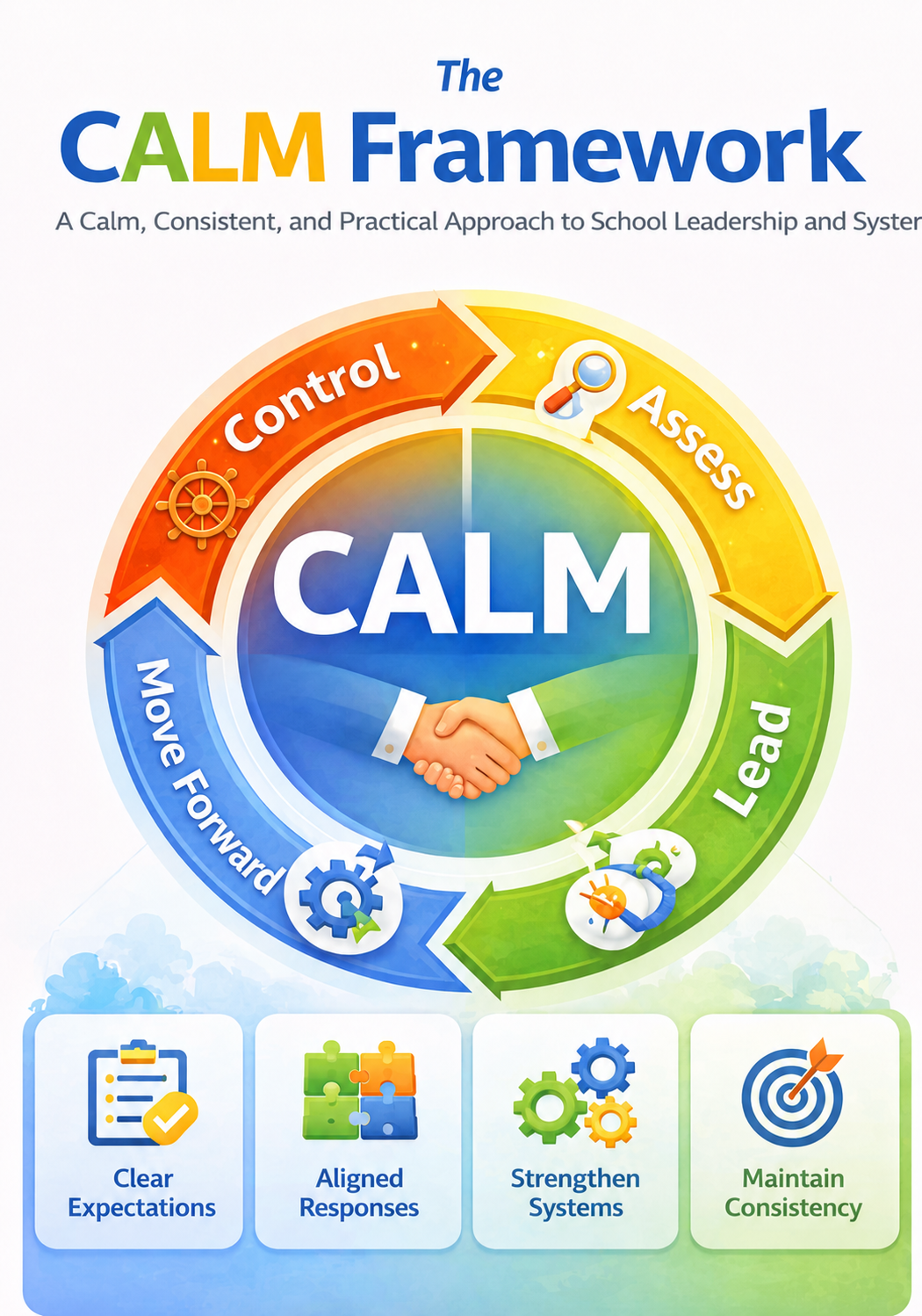
Schools don't struggle because difficult situations happen. They struggle because the adults responding to those situations are inconsistent, unclear, or unsupported by strong systems — and the same issues keep coming back.
Most leadership training focuses on theory, vision, or inspiration. It doesn't address what leaders actually do when a student is escalating in the hallway, a parent is demanding answers, or a staff member is undermining expectations.
CALM in Leadership is built around exactly that — the practical moves leaders make in real moments, and the consistent approach that shapes whether those moments lead to improvement or just repetition.
Without a Clear Framework
- Reactive decisions made under pressure
- Inconsistent responses across leaders
- The same issues handled differently each time
- Staff lose trust in follow-through
- Problems resolved but never prevented
With the CALM Framework
- Intentional responses grounded in a clear process
- Consistent leadership across situations
- Shared language and aligned adult responses
- Staff experience leadership as steady and trustworthy
- Difficult moments lead to stronger systems
What CALM in Leadership Looks Like in Practice
CALM is a four-step process. Each step builds on the one before it — and together they help leaders move from reactive to intentional.
Control the Environment
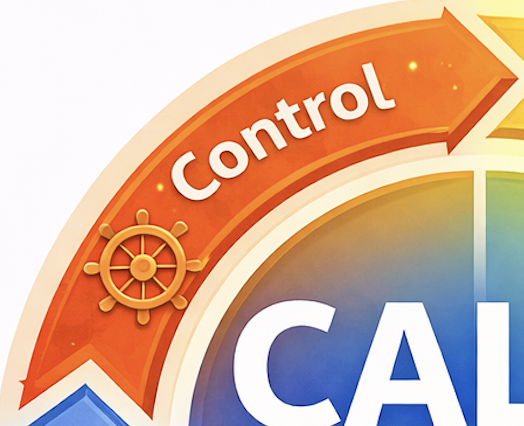
The first step is to stabilize the environment before trying to solve the problem. For leaders, this means bringing steadiness into tense situations — controlling tone and pace, reducing confusion, and helping others stay focused and regulated.
In schools, unstable environments lead to rushed decisions, emotional reactions, and unclear communication. CALM begins by creating the conditions for a better response.
Assess the Situation
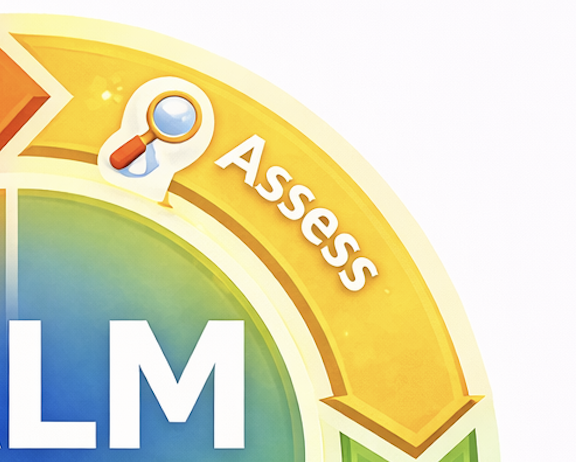
Not every issue is what it first appears to be. A repeated discipline concern may be a systems issue. Staff frustration may reflect unclear expectations. Parent conflict may reveal a communication breakdown rather than a one-time disagreement.
Assessment means gathering facts, separating assumptions from evidence, looking for root causes, and understanding whether the problem is isolated or systemic.
Lead the Response

Once the environment is stable and the issue is understood, leaders must respond with clarity, professionalism, and consistency. This means responding instead of reacting — communicating clearly, holding boundaries without escalating, and aligning action with school values.
Strong leadership helps staff and families experience leadership as steady, predictable, and trustworthy — even when situations are difficult.
Move Forward

CALM doesn't stop at resolution. It asks leaders to create progress after the moment — following up, restoring trust when needed, clarifying expectations, identifying patterns, and improving systems so the same issue is less likely to repeat.
Many schools handle immediate issues without building anything stronger afterward. CALM is built on the belief that difficult moments should lead to greater clarity, better alignment, and stronger systems over time.
Where CALM in Leadership Makes a Difference
CALM can be applied to the real leadership situations school leaders face every day.
Ready to Give Your Leadership Team a Better Framework?
Whether you're looking for a keynote, a workshop, or longer-term support, CALM in Leadership can be tailored for your school or district. Start with a free 30-minute conversation.
CALM IN LEADERSHIP PAGE FAQ
-
CALM in Leadership is a four-step framework created by Joe Hally to help school administrators respond to student, staff, and parent challenges with clarity and consistency. The steps are: Control the Environment (stabilize before solving), Assess the Situation (understand the root cause), Lead the Response (respond intentionally, not reactively), and Move Forward (follow up and strengthen systems). It is designed for principals, assistant principals, deans, and school leadership teams.
-
Struggling administrators often lack a clear framework for how to respond consistently under pressure. Administrator Avenue offers CALM Leadership Training — a practical, structured approach that gives school leaders the tools to respond with clarity, align their team, and build systems that prevent recurring issues. Training is available as a keynote, workshop, or half- or full-day session, in-person or virtually.
-
Administrator Avenue offers several levels of professional development for principals and school leadership teams: CALM Leadership Training (keynote to full-day formats), the CALM Diagnostic Package (training plus structured tools to identify gaps), and the CALM Implementation Partnership (ongoing guided support). All are grounded in practical application, not just theory. Learn more at administratoravenue.com/consulting-services.
-
Leadership team consistency requires shared language, clear expectations, and a common framework for how to handle difficult situations. CALM in Leadership gives your team exactly that — a practical process they can apply together so students, staff, and parents experience the same response regardless of who is on duty.